
As an Amazon Associate, Gizmochina earns from qualifying purchases. Links on this page may earn us a commission at no extra cost to you.
Jackery’s latest portable power station is small enough to carry in a bag but still packs enough capacity to recharge a laptop or phone multiple times. Called the Jackery Explorer 100D, it comes with a 96Wh (30,000mAh) LiFePO4 battery and supports USB-C charging at up to 140W.
The Explorer 100D went on sale in Canada on October 28 through Jackery Canada, Amazon, and Amazon Canada. It has a regular price of CAD 179, although you can currently grab it at CAD 145 from its official website.
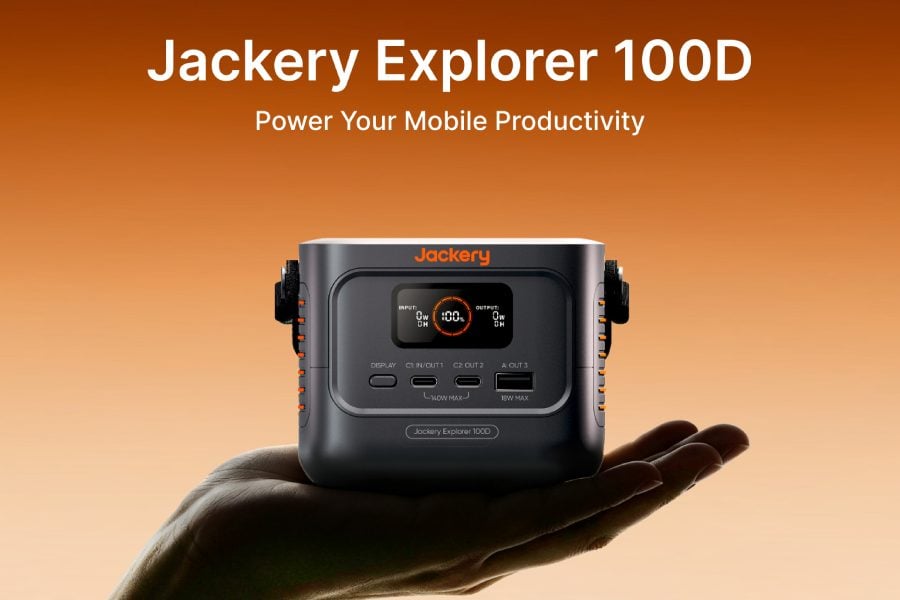
A small power station with 140W USB-C charging
Despite its compact size, the Explorer 100D has two USB-C ports, each capable of delivering up to 140W. There’s also an 18W port for smaller devices, bringing the total output to 158W. It supports PD, PPS, and AVS charging protocols, which means it can handle a wide range of phones, tablets, and laptops.
Jackery provides a few examples of what the battery can handle. An iPhone 17, iPhone 17 Pro Max, or iPhone 18 Pro can reach 50% charge in around 20 minutes, while the DJI Pocket 3 can get there in as little as 10 minutes. The battery can also provide more than three full charges for a flagship phone or more than one full charge for a 14-inch MacBook Pro.
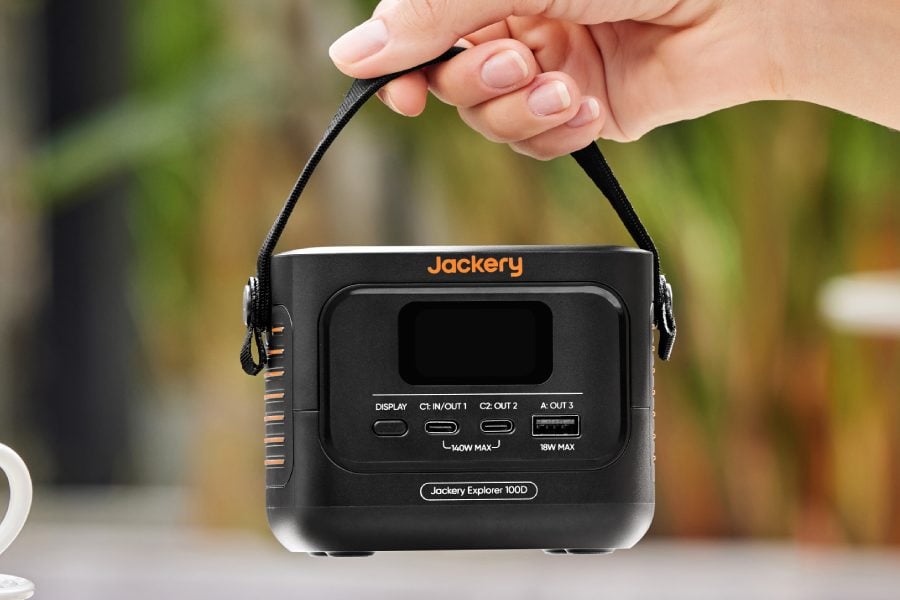
The 96Wh battery uses LiFePO4 cells, the same chemistry found in Jackery’s larger power stations. It’s rated for at least 3,000 charge cycles while retaining more than 80% of its original capacity. Jackery says this is 50% more than the Explorer 100 Plus and estimates up to eight years of regular use.
The Explorer 100D measures 11.9 x 8.3 x 8.7 cm and weighs 855g. A soft-touch handle makes it easier to carry, while an optional shoulder strap provides another way to transport it. Its 96Wh capacity also keeps it within the typical 100Wh limit for portable batteries on domestic and international flights, although airline rules still apply.
Multiple ways to recharge
The power station supports several charging options, depending on where you are. It has a 100W USB PD connection and can take the battery to 80% in around 1.6 hours, with a full charge taking just over two hours. You can also top it up to 100W via solar charging, and it delivers similar charging times under clear skies and direct sunlight.
Likewise, charging through a 12V car outlet takes a little over three hours to reach 80%, while a full recharge takes just over four hours. A 24V DC power source, commonly found in RVs, boats, and commercial vehicles, cuts the full charging time to slightly over two hours.
FREE DAILY NEWSLETTER
Joel Explains
What matters in phones and gadgets, before it reaches you. From Gizmochina’s editor-in-chief, every morning.
Join 1,500+ readers. One email a day, unsubscribe in one click.


Comments